Discover
What's My Foot Shape? Egyptian, Greek, Roman, and Peasant Feet Explained
Egyptian, Greek, Roman, or Peasant? Here's how to figure out your foot shape in about ten seconds, and what it actually means for your dancing and your pointe shoes.
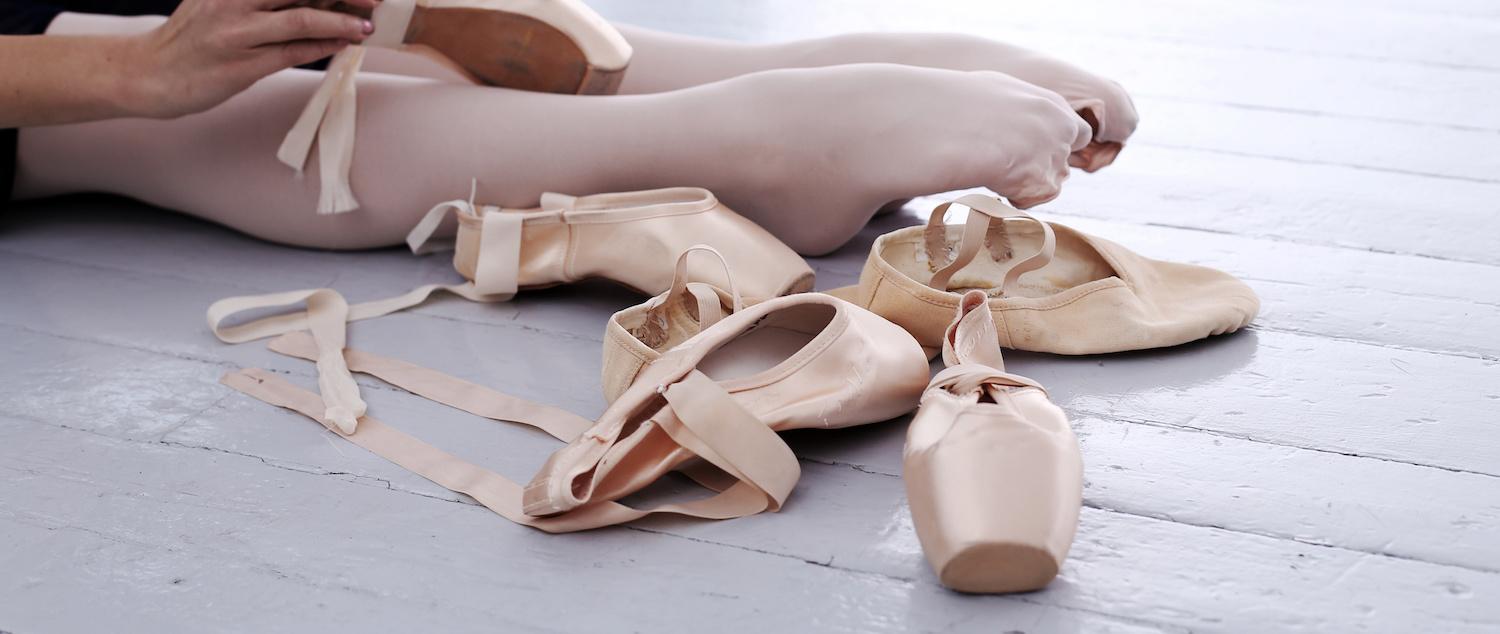
Here’s a fun thing to do at your next class: get a group of dancers to take off their shoes and look at everyone’s toes. You’ll see it right away. Some feet slope down in a tidy little staircase, some have a second toe reaching out ahead of the pack, and some look almost square across the top. Same body part, totally different blueprints.
Those blueprints have names, and knowing yours is genuinely useful. Not because one is better than another (they’re not), but because your foot shape quietly decides which pointe shoes will feel like heaven and which will feel like a medieval torture device. So let’s figure out what you’re working with.
The quick version
Four shapes come up the most. Here’s the cheat sheet before we get into detail:
- Egyptian: big toe is the longest, and the rest slope down in a line.
- Greek: the second toe is longer than the big toe.
- Roman (or Peasant): the first three toes are about the same length, so the front of the foot looks square.
- Squared: all the toes are nearly even, like a straight edge.
Most feet aren’t a perfect textbook example of any one of these. You might be mostly Egyptian with a slightly long second toe, and that’s normal. Think of these as categories on a spectrum, not four boxes you have to squeeze into.
How to check your own feet in ten seconds
You don’t need anything fancy. Sit down, put your bare foot flat on the floor, and look straight down at your toes.
- Find your big toe and your second toe.
- See which one sticks out farthest.
- Notice whether the rest of the toes slope down gradually or sit almost level.
If you want to be sure, take a photo from directly above with your foot flat. Phone cameras foreshorten things at an angle, so straight down is the honest view. Bonus: do both feet, because they’re often not identical. Feet are weird like that.
Egyptian feet
This is the most common shape, so there’s a decent chance it’s yours. With an Egyptian foot, your big toe is the longest, and each toe after it steps down a little, forming that smooth diagonal line. If you drew a line along the tips of your toes, it would look like a gentle slope.
What it means for dancing
Egyptian feet tend to be on the longer, narrower side, which a lot of pointe shoe boxes are built for. The catch is that long big toe. It takes most of the pressure when you’re up on pointe, so if a shoe is even slightly too short, that toe is the first to complain. Egyptian dancers usually do best in a tapered box that follows the natural slope of the toes.
Greek feet
Greek feet are the ones where your second toe is longer than your big toe. It’s so common that even the Statue of Liberty has it, and if you’ve ever heard a doctor say “Morton’s toe,” that’s the same thing. Nothing’s wrong with you. You’re in extremely good company.
What it means for dancing
That longer second toe changes the game a little. On pointe, the weight wants to load onto the second toe instead of the big one, which can make the foot roll inward (dancers call this sickling) if the shoe isn’t right. The fix is usually a box with a bit more length and a slightly tapered-to-square shape, sized to that second toe rather than the big one, with padding to fill the gap. We go deep on this in our guide to pointe shoes for Grecian feet.
Roman and Peasant feet
Here’s where the names get confusing, so let’s clear it up. Roman feet and Peasant feet are basically describing the same idea: your first three toes are close to the same length, so the front of your foot looks square or blunt rather than sloped. Some people split hairs about tiny differences between the two, but for dancing purposes, treat them as the same family. You’ll also hear “Giselle feet” for this shape.
What it means for dancing
A squarer foot spreads weight more evenly across the front, which is actually great for stability on pointe. The downside is that a lot of standard boxes are cut for tapered feet, so a Roman or Peasant foot can feel pinched at the corners in the wrong shoe. What you want is a squarer, roomier box that gives all three long toes somewhere to live. Our roundup for Roman and Giselle feet walks through specific brands.
Why any of this matters (the honest answer)
Let’s be real about what foot shape does and doesn’t do.
It does affect:
- Which pointe shoe box will actually fit you
- Where pressure lands when you’re up on your toes
- How prone you might be to certain rubs, blisters, or bunions
It does not affect:
- Whether you can become a beautiful dancer
- How high your arch is or how pointed your feet look
- Your worth as a ballerina in any way, shape, or form
Foot shape is a fitting detail, like knowing your ring size before you buy a ring. It saves you pain and money. It’s not a report card.
What to do with this info
Once you know your shape, the next step is fit, and this is the part worth taking seriously. A shoe chosen for your foot type, sized correctly and padded well, is the difference between loving pointe and dreading it. So:
- Go to a proper pointe shoe fitting rather than guessing online, especially for a first pair.
- Tell the fitter your foot shape and let them show you a few box options.
- Expect to try several. The right shoe usually announces itself once you’re standing in it.
Then, when you know your shape, read the guide made for it. We have full breakdowns for Egyptian, Greek or Grecian, and Roman or Giselle feet, each with the brands and boxes that tend to work.
Your feet are going to carry you through every plié, every pirouette, and a truly unreasonable number of relevés. The least we can do is put them in the right shoes.
Good to know
Frequently Asked Questions
What are the four main foot shapes?
The four you'll hear about most are Egyptian (big toe is longest, toes slope down in a neat line), Greek (second toe is longest), Roman or Peasant (first three toes are about the same length, giving a square edge), and a rarer squared type where all toes line up almost evenly. Most people are a mix, and there's no wrong one to have.
How do I know what foot shape I have?
Look down at a bare foot. If your big toe is clearly the longest and the rest step down like a staircase, that's Egyptian. If your second toe pokes out past the big one, that's Greek. If your first three toes are basically level and your foot looks square across the front, that's Roman or Peasant. Snapping a straight-on photo makes it easier to see.
Does foot shape affect ballet or pointe work?
Yes, but mostly for comfort and fit, not talent. Your foot shape changes how weight spreads across your toes inside a pointe shoe, which is why fitters pick different box shapes for different feet. It does not decide whether you can dance well. Plenty of professionals have every foot shape there is.
Which foot shape is best for pointe?
There isn't a best one. Each shape just pairs well with different pointe shoe boxes. Egyptian feet often like a tapered box, Greek feet usually want a slightly longer box with room for that second toe, and Roman or Peasant feet do well in a squarer, wider box. The best shape is the one you fit correctly.
Is Greek foot the same as Morton's toe?
Pretty much. Greek foot, where the second toe is longer than the big toe, is the same thing doctors call Morton's toe. It's extremely common and mostly harmless, though it can change how you should size a pointe shoe.
Can my foot shape change over time?
The basic shape you're born with stays the same, but years of dancing, growth spurts, and things like bunions can shift how your toes sit. If your shoes suddenly stop feeling right, it's worth getting re-measured rather than assuming your old size still works.