Injury Prevention
Common Ballet Injuries and How to Prevent Them
A calm, plain-English guide to the most common ballet injuries, where they come from, and the everyday habits that help dancers stay healthy and keep dancing.
If your dancer comes home rubbing an ankle, or you’re the one icing your foot after class, take a breath. Most ballet injuries are overuse issues, which is a fancy way of saying “too much of the same thing without enough rest,” and the majority are both preventable and very fixable. This is a plain-English tour of the ones that come up most, what they feel like, and the small habits that keep them away.
None of this replaces a real appointment. Think of it as a map so you know what you’re looking at and when it’s worth a call.
First, the big picture
Ballet asks a lot of the feet, ankles, and hips, so that’s where most trouble lands. The pattern is almost always the same: repeat a movement enough times without enough recovery, and the tissue doing the work gets irritated. That’s why the fix is so often the unglamorous trio of strength, rest, and good technique rather than anything dramatic. Keep that in mind as we go, because it’s the through-line for every injury below.
Ankle sprains
A sprain is a stretched or torn ligament, usually from a landing that rolls the ankle. It’s one of the most common ballet injuries, and it can range from “walk it off by tomorrow” to something that needs weeks.
- Feels like: sudden pain on the outside of the ankle, often with swelling.
- Prevent it with: strong, stable ankles. Balance work, calf and foot strengthening, and not landing from jumps on tired legs all help.
If there’s real swelling, bruising, or you can’t put weight on it, get it checked before dancing on it again.
Achilles tendonitis (dancers tendonitis)
The Achilles is the thick cord at the back of your ankle, and tendonitis just means it’s irritated, usually from a lot of jumping and rising through relevé. This is the classic “dancers tendonitis” you’ll hear about.
- Feels like: stiffness and ache at the back of the ankle, worse at the start and end of class.
- Prevent it with: gradual increases in jumping load, good calf strength, and not rolling straight into allegro cold.
We go deeper, including how to tell it apart from a strain, in our guide to Achilles tendonitis in ballet dancers.
Hip pain and impingement
Hips take a beating in ballet because turnout lives there. Impingement is when the bones and soft tissue at the hip pinch during certain movements, and it’s more common than a lot of dancers realize.
- Feels like: a deep pinch or ache at the front or side of the hip, often in high extensions or grand plié.
- Prevent it with: honest turnout (from the hips, not forced at the feet), plus hip and core strength.
Because hip pain has a few possible causes, it’s worth understanding. Our post on hip pain from ballet walks through what’s usually harmless and what’s worth a closer look.
Plantar fasciitis
The plantar fascia is a band of tissue along the bottom of your foot, and when it gets irritated it makes that first-step-of-the-morning pain a lot of dancers know well.
- Feels like: a sharp or achy heel and arch, especially those first steps after rest.
- Prevent it with: foot strengthening, calf stretches, and supportive shoes off the dance floor too.
Here’s the full breakdown on what causes plantar fasciitis and how to deal with it.
Stress fractures
A stress fracture is a tiny crack in a bone from repeated pounding, most often in the foot or shin. These are the ones to take seriously, mostly because they need genuine rest and rushing them just draws things out.
- Feels like: a pinpoint ache that gets worse with activity and eases with rest, sometimes tender to touch on one exact spot.
- Prevent it with: sensible training loads, real rest days, and enough fuel and nutrition to keep bones strong.
Pinpoint bone pain that keeps coming back is a “see someone” situation, not a push-through one.
Snapping hip
Snapping hip does what it says: a snap or click at the hip during développé or big leg movements. It’s usually a tendon gliding over bone, and it’s often harmless even when it sounds alarming.
- Feels like: a click or snap, sometimes with a little ache, sometimes with none at all.
- Prevent it with: hip flexor and glute strength, plus gentle mobility rather than forcing range.
Painless snapping is often nothing. Snapping that comes with real pain is worth mentioning to a physio.
Knee strain
Knees sit between two very busy joints, so they cop the fallout when the hips or feet aren’t doing their share. A lot of knee pain in ballet traces back to rolling in on the feet or forcing turnout.
- Feels like: ache around or under the kneecap, often after plié-heavy work.
- Prevent it with: proper alignment (knees tracking over toes), and not cheating turnout from the knee.
Bunions and toe troubles
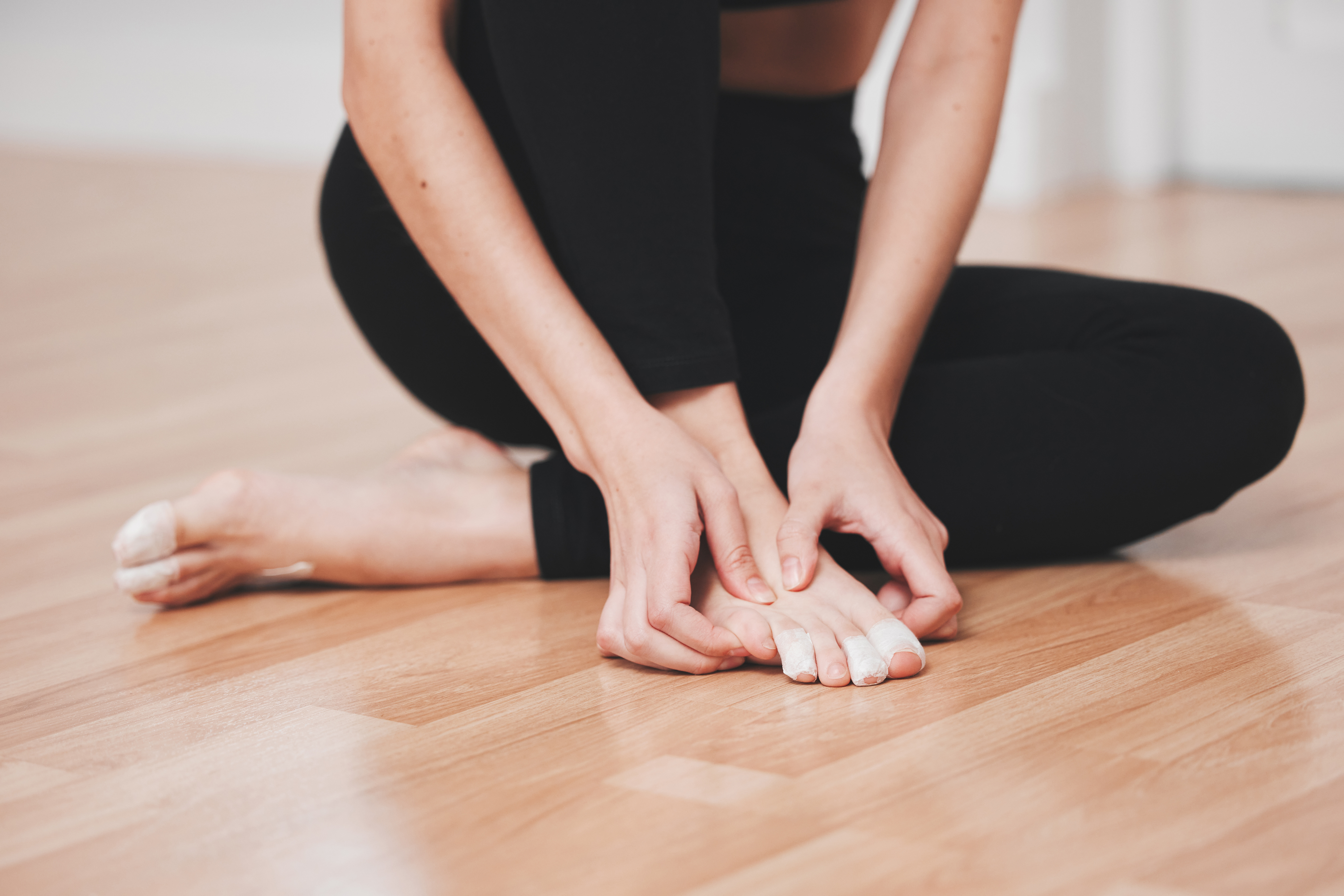
Bunions, blisters, and cranky toes come with the pointe territory, and while some are just part of dancing, others are fit problems in disguise.
- Feels like: a bump at the base of the big toe, rubbing, or pinching at the front of the shoe.
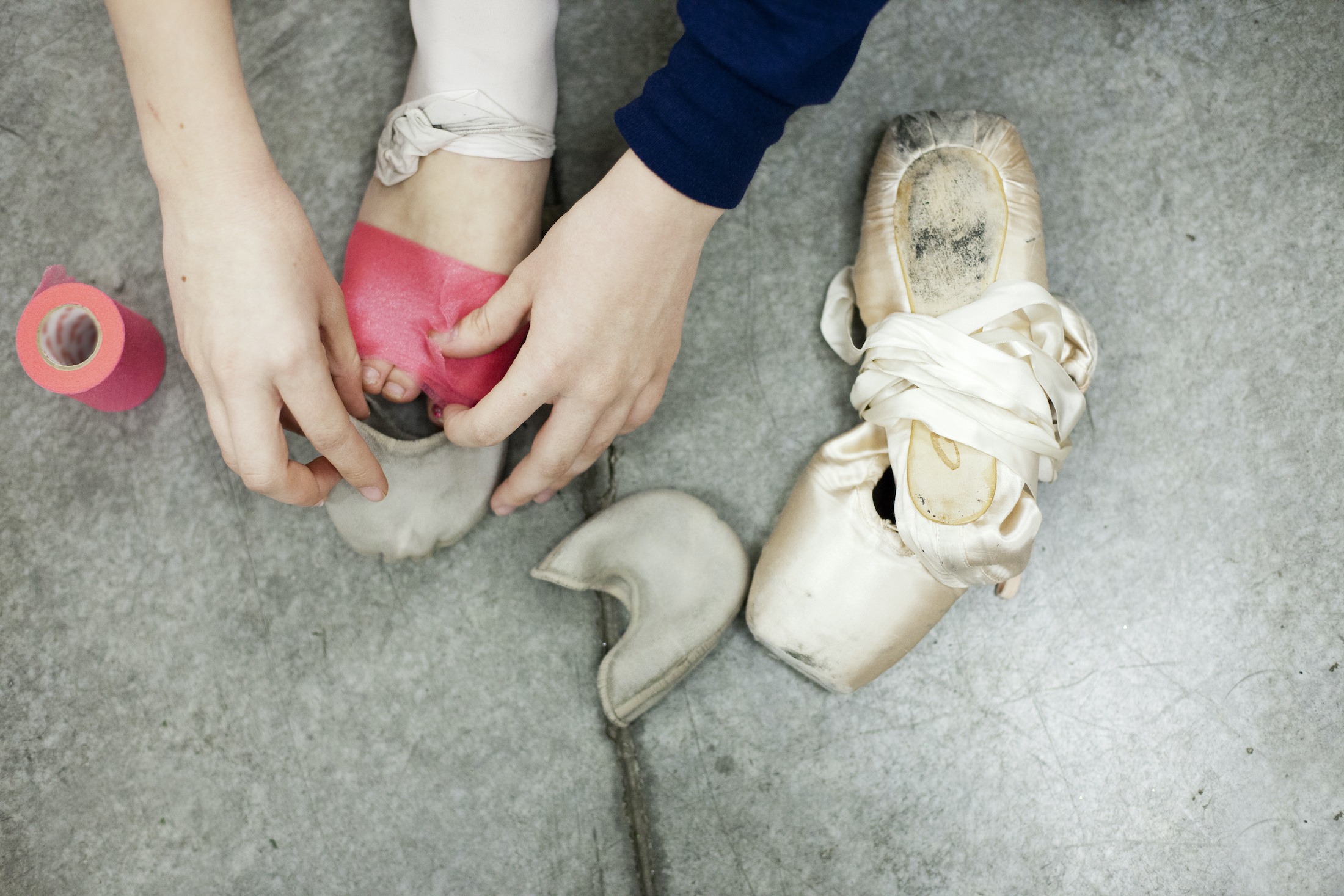
- Prevent it with: well-fitted shoes, sensible padding, and not squeezing into a box that’s wrong for your foot.
Our guide to ballerina toe problems covers what’s normal, what’s not, and how to keep your toes happy.
The prevention playbook, in one place
Notice how the same advice keeps showing up? That’s not lazy writing, it’s genuinely the answer. If you want the short list:
- Strength. Strong feet, ankles, hips, and core protect everything above and below them.
- Rest. Recovery is when the body actually gets stronger. Rest days aren’t slacking.
- Technique. Most injuries start with a shortcut, usually forced turnout or rolling feet.
- Shoes and fit. The right shoe for your foot saves you a world of trouble.
For the full version, our injury prevention guide for ballet dancers puts it all together with the strength work that matters most.
When to actually see someone
Here’s the part worth saying plainly, especially for the parents reading. Occasional soreness after a hard class is normal. Pain that’s sharp, that swells, that changes how a dancer walks, or that keeps returning to the same spot is your cue to get it looked at by a doctor or physiotherapist. Nobody knows a body like the person who trains it, so trust that instinct that something isn’t right.
Catching things early almost always means less time off, not more. That’s the whole game. Rest a small niggle now, and you’re usually back at the barre far sooner than if you’d danced through it and hoped.
Good to know
Frequently Asked Questions
What are the most common ballet injuries?
Most ballet injuries show up in the feet, ankles, and hips, because that's where all the load lands. The ones you'll hear about most are ankle sprains, Achilles tendonitis, hip pain and impingement, plantar fasciitis, stress fractures, snapping hip, knee strain, and bunions or other toe troubles. The good news is that the majority are overuse issues, which means they're often preventable and very treatable when you catch them early.
How can dancers prevent injuries?
The boring stuff works: warm up properly, build strength in the ankles, feet, hips, and core, and give the body real rest between hard days. Good technique matters too, since forcing turnout or rolling in on the feet is where a lot of injuries start. Well-fitted shoes and honest communication with a teacher round it out. Prevention isn't one big thing, it's a lot of small habits stacked up.
What are the worst ballet injuries?
The ones that tend to sideline a dancer longest are stress fractures and serious ankle or Achilles injuries, mostly because they need real rest to heal and rushing them backfires. That said, 'worst' usually just means 'ignored longest.' Almost any ballet injury is more manageable when it's caught early, which is why nagging pain is worth a check rather than a wait-and-see.
What is dancers tendonitis?
Tendonitis is irritation of a tendon, the tough cord that connects muscle to bone, usually from doing a lot of the same movement without enough recovery. In dancers it most often hits the Achilles at the back of the ankle or the tendons along the foot. It tends to feel stiff and achy at the start of class and worse after. Rest, gentler loading, and a physio's guidance are the usual path back.
When should a dancer see a doctor for pain?
See a professional if pain is sharp, if it doesn't settle with a few days of rest, if there's swelling or bruising, if it changes how the dancer walks, or if it keeps coming back in the same spot. Pain that shows up during weight-bearing on pointe deserves attention sooner rather than later. When in doubt, get it looked at. A quick visit early usually means a shorter time off than pushing through.
Are ballet injuries common in young dancers?
Some aches are part of training hard, especially during growth spurts when bones and muscles are changing fast. Most of it is minor and settles with rest. What's worth watching is pain that lingers, gets worse, or makes a dancer favor one side. That's a signal to slow down and check in, not to power through.